





ไม่ใช่แค่ “ซื้อ” มีดญี่ปุ่น แต่ได้นำวัฒนธรรมการดูแลรักษากลับไปด้วย จัดเวิร์กช็อปลับมีดสำหรับนักท่องเที่ยวต่างชาติที่มาเยือนญี่ปุ่น
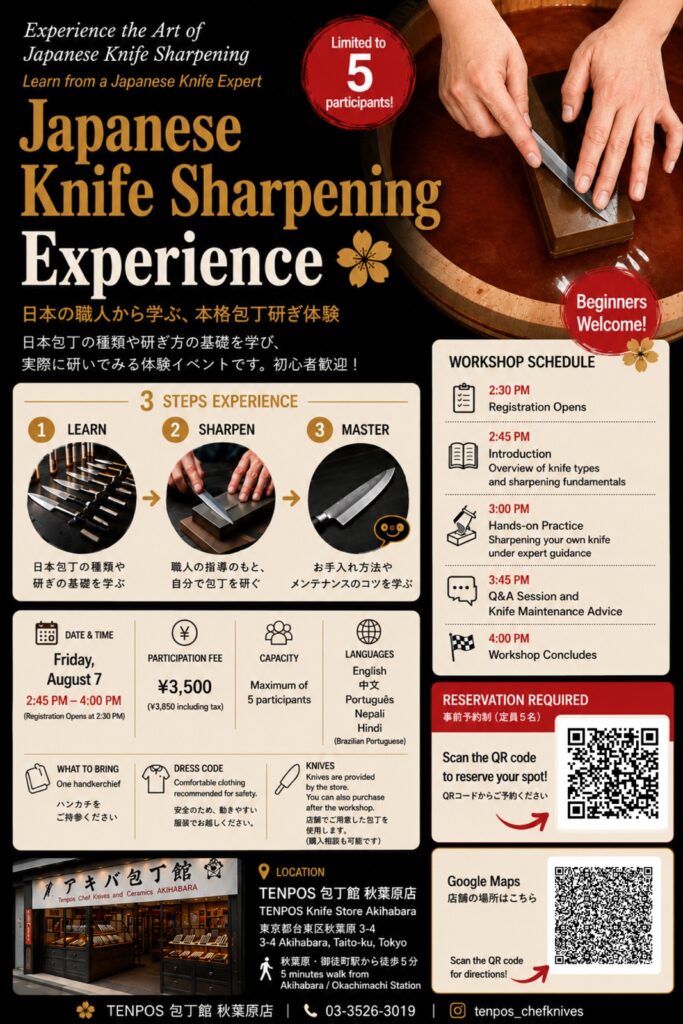
เวิร์กช็อปครั้งนี้ซึ่งจัดขึ้นที่ร้าน Tenpos Akiba (เทนโปส อากิบะ) มอบประสบการณ์ให้นักท่องเที่ยวต่างชาติที่มาเยือนญี่ปุ่นได้ลับคมและดูแลรักษามีดญี่ปุ่นด้วยตนเอง
มีดญี่ปุ่นได้รับความสนใจอย่างสูงจากเชฟและผู้ที่หลงใหลการทำอาหารในต่างประเทศ ด้วยความคมกริบ งานเก็บรายละเอียดที่งดงาม และเทคนิคการผลิตของช่างฝีมือ
อย่างไรก็ตาม ไม่ว่ามีดจะดีเยี่ยมเพียงใด หากใช้งานต่อเนื่องไปเรื่อย ๆ ความคมก็จะค่อย ๆ ลดลง สิ่งที่ขาดไม่ได้สำหรับการรักษาสมรรถนะดั้งเดิมของมีดให้คงอยู่ยาวนาน คือ “การลับคม” ด้วยหินลับมีด
เวิร์กช็อปครั้งนี้ซึ่งจัดขึ้นที่ร้าน Tenpos Akiba มอบประสบการณ์ให้นักท่องเที่ยวต่างชาติที่มาเยือนญี่ปุ่นได้ลับคมและดูแลรักษามีดญี่ปุ่นด้วยตนเอง โดยมีจุดมุ่งหมายให้ผู้เข้าร่วมไม่เพียงซื้อมีดที่ผลิตเสร็จสมบูรณ์แล้วเท่านั้น แต่ได้เรียนรู้พื้นฐานของการลับคมจากช่างฝีมือ และได้สัมผัสวัฒนธรรมญี่ปุ่นที่ใช้เครื่องมือหนึ่งชิ้นต่อไปอย่างยาวนาน
ผู้เข้าร่วมสามารถนำมีดที่ใช้อยู่เป็นประจำมาเองได้ หรือจะเข้าร่วมด้วยมีดที่ซื้อในวันงานก็ได้เช่นกัน นอกจากผู้ที่ต้องการฟื้นคืนความคมของมีดที่ใช้อยู่ทุกวันแล้ว ผู้ที่อยากรู้ อยากเรียน และอยากฝึกฝนวิธีดูแลรักษามีดเล่มใหม่ที่ซื้อในญี่ปุ่นให้ใช้ได้ยาวนาน ก็สามารถเข้าร่วมได้เช่นกัน
เทคนิค “การลับคม” ที่อยู่เบื้องหลังความคมของมีดญี่ปุ่น
ในการทำมีดแบบดั้งเดิมของญี่ปุ่น ไม่เพียงขั้นตอนการตีเหล็กกล้าให้ขึ้นรูปเป็นมีดเท่านั้น แต่ “ฮะสึเกะ” (hatsuke) หรือการเก็บคม ซึ่งเป็นการปรับความหนาและมุมของใบมีดให้อยู่ในสภาพที่ตัดได้จริง ก็มีบทบาทสำคัญเช่นกัน
โดยเฉพาะการทำมีดของเมืองซาไก (Sakai) นั้น มีการสืบทอดระบบแบ่งงานกันทำ ซึ่งช่างฝีมือเฉพาะทางแต่ละคนจะรับผิดชอบงานตีขึ้นรูป การเก็บคม การประกอบด้ามมีด เป็นต้น
ช่างลับมีด (โทกิชิ) ผู้รับหน้าที่เก็บคม จะพิจารณารูปทรงของมีด วัตถุประสงค์การใช้งาน และคุณสมบัติของวัสดุเหล็กกล้า แล้วเลือกใช้หินลับมีดหลายชนิดให้เหมาะสม การลับคมไม่ใช่เพียงงานเจียรปลายคมให้บางลงเท่านั้น แต่เป็นเทคนิคที่ปรับความหนาของตัวมีดทั้งเล่มและความโค้งของใบมีด ไปจนถึงปรับว่ามีดจะเข้าไปในวัตถุดิบอย่างไร และตัดขาดออกจากกันอย่างไร
มีดที่ช่างตีเหล็กทำขึ้นก็เช่นกัน ต่อเมื่อได้รับการเก็บคมโดยช่างลับมีดแล้วเท่านั้น จึงจะเสร็จสมบูรณ์เป็นมีดหนึ่งเล่มที่ใช้ทำอาหารได้
สัมผัสวัฒนธรรมการผลิตของญี่ปุ่นผ่านมีดทำครัว
ในหมู่นักท่องเที่ยวต่างชาติที่มาเยือนญี่ปุ่น มีดที่ผลิตในญี่ปุ่นได้รับความนิยมทั้งในฐานะของฝากและอุปกรณ์ทำอาหาร แต่การจะใช้มีดได้ยาวนานนั้น จำเป็นต้องลับคมใหม่ให้เหมาะกับสภาพของใบมีด แทนที่จะซื้อเล่มใหม่ทุกครั้งที่ความคมลดลง
ในเวิร์กช็อปครั้งนี้ ผู้เข้าร่วมจะได้เรียนรู้พื้นฐานของการลับมีดในรูปแบบลงมือปฏิบัติจริง ทั้งวิธีใช้หินลับมีด มุมที่วางมีดลงบนหิน วิธีลงน้ำหนัก และวิธีตรวจสอบสภาพของปลายคม
การเคลื่อนมีดไปบนหินลับ พร้อมใช้ปลายนิ้วสัมผัสความเปลี่ยนแปลงของปลายคมไปทีละขั้น ทำให้ได้สัมผัสด้วยตัวเองว่ามีดซึ่งปกติเรามองเห็นในสภาพสินค้าสำเร็จรูปนั้น ถูกรักษาให้อยู่ในสภาพที่ตัดได้ด้วยเทคนิคแบบใด
นอกจากนี้ การเปรียบเทียบความคมก่อนและหลังการลับ ยังทำให้รู้สึกได้ถึงกระบวนการที่สมรรถนะของมีดฟื้นคืนกลับมาด้วยมือของตัวเอง
จาก “ซื้อกลับบ้าน” สู่ “ใช้ต่อไปอย่างยาวนาน”
มีดเป็นเครื่องมือที่สึกหรอไปตามการใช้งาน และเปลี่ยนรูปทรงไปทีละน้อยทุกครั้งที่ลับคม การดูแลรักษาอย่างเหมาะสมต่อเนื่องจะทำให้ใช้มีดเล่มหนึ่งได้ยาวนาน และค่อย ๆ เข้ากับมือและการใช้งานของเจ้าของ
เวิร์กช็อปครั้งนี้ไม่เพียงถ่ายทอดความคมกริบที่มีดญี่ปุ่นมีเท่านั้น แต่ยังถ่ายทอดฝีมือช่างที่อยู่เบื้องหลังสมรรถนะดังกล่าว รวมถึงแนวคิดของการซ่อมบำรุงและใช้เครื่องมืออย่างทะนุถนอมต่อไปเรื่อย ๆ ด้วย
ไม่ใช่เพียงซื้อมีดญี่ปุ่นกลับบ้านเท่านั้น แต่ให้ได้นำเทคนิคและวัฒนธรรมสำหรับการดูแลรักษาด้วยตนเองและใช้งานต่อไปอย่างยาวนานกลับไปด้วย ผ่านการลับมีด งานนี้จึงมอบโอกาสให้ได้สัมผัสการผลิตแบบญี่ปุ่นและวิธีอยู่ร่วมกับเครื่องมือ
ข้อมูลงาน
- วันและเวลาจัดงาน วันศุกร์ที่ 7 สิงหาคม เวลา 14:30–16:00 น.
- สถานที่จัดงาน Tenpos Akiba (เทนโปส อากิบะ)
3-4 อากิฮาบาระ เขตไทโต โตเกียว - จำนวนที่รับ 5 คน
- สิ่งที่ต้องนำมา ผ้าเช็ดหน้า
- การจอง ต้องจองล่วงหน้า
- มีดที่ใช้ ซื้อที่ร้านในวันงาน หรือนำมาเอง
- ข้อควรระวัง: เนื่องจากมีการใช้ของมีคม เพื่อความปลอดภัยกรุณาสวมเสื้อผ้าที่เคลื่อนไหวสะดวก
- ภาษาที่ให้บริการ: ภาษาอังกฤษ, ภาษาจีน, ภาษาโปรตุเกส (บราซิล)
- ค่าเข้าร่วม: 3,500 เยน (รวมภาษีแล้ว 3,850 เยน)
- วิธีชำระเงิน: เงินสด・PayPay・บัตรเครดิต
[บัตร]MasterCard・American Express・VISA・JCB
ข้อมูลวิทยากร
คุณโอคุไดระ โทโมอากิ (Tomoaki Okudaira)
เกิดที่เมืองซาไก จังหวัดโอซาก้า
เจ้าของร้านมีดเฉพาะทางแห่งเมืองซาไก “Hocho no Sakaitoku” (包丁の堺徳)
นอกจากจำหน่ายมีดโดยเน้นมีดตีขึ้นรูปแบบดั้งเดิมของซาไก (Sakai Uchihamono) แล้ว ยังจัดอบรมถ่ายทอดเทคนิคการลับคมและกิจกรรมทดลองลับมีดอย่างสม่ำเสมอ
โดยมีซาไกเป็นศูนย์กลาง เขายังศึกษาลักษณะเฉพาะของมีดในแต่ละท้องถิ่นทั้งที่เซกิ (จังหวัดกิฟุ) และสึบาเมะ-ซันโจ (จังหวัดนีงาตะ) เพื่อสั่งสมความชำนาญในฐานะช่างลับมีดอย่างต่อเนื่อง
ข้อมูลบริษัท
บริษัท Tenpos Busters จำกัด (株式会社テンポスバスターズ)
ที่ตั้ง: ชั้น 7 อาคารซันยู ฮิงาชิ-คามาตะ 2-30-17 ฮิงาชิ-คามาตะ เขตโอตะ โตเกียว
ผู้แทนบริษัท: โมริชิตะ อัตสึชิ (Atsushi Morishita)
ใบอนุญาตค้าของเก่า: โตเกียว เลขที่ 302211706229
[English Version Below]
Take Home More Than a Japanese Knife: Knife-Sharpening Workshop for International Visitors
Held at the Tenpos Akiba, this hands-on workshop gives visitors to Japan the opportunity to sharpen and care for a Japanese kitchen knife themselves.
Japanese kitchen knives are highly regarded by professional chefs and cooking enthusiasts around the world for their exceptional sharpness, beautiful finish and skilled craftsmanship.
However fine a knife may be, its edge will gradually become dull through continued use. Sharpening with a whetstone is essential to maintaining the knife’s original performance over time.
This workshop at the Tenpos Akiba is designed for international visitors to Japan and offers a hands-on introduction to sharpening and caring for Japanese kitchen knives.
Rather than simply purchasing a finished knife, participants will learn the fundamentals of sharpening directly from an experienced craftsman. The workshop aims to introduce participants to the Japanese tradition of caring for a single tool and using it for many years.
Participants may bring a knife they regularly use or take part using a knife purchased at the store on the day of the workshop.
The workshop is suitable both for those wishing to restore the sharpness of a well-used knife and for those who have purchased a new knife in Japan and would like to learn how to maintain it properly for years to come.
The Sharpening Skills Behind the Performance of Japanese Knives
In traditional Japanese knife-making, forging the steel into the shape of a knife is only one part of the process. Another essential stage is hatsuke, or blade finishing, in which the thickness and angle of the blade are carefully adjusted to create a functional cutting edge.
In Sakai’s traditional knife-making industry in particular, a specialised division of labour has been passed down through generations. Forging, sharpening and fitting the handle are each undertaken by different specialist craftspeople.
A professional sharpener assesses the shape and intended use of each knife, as well as the characteristics of its steel, before selecting from several different whetstones.
Sharpening is not simply a matter of grinding the very tip of the blade until it becomes thin. It involves adjusting the thickness of the entire blade and refining its curves to influence how smoothly it enters food and how cleanly the food separates after being cut.
Only after the blade has been shaped and finished by a sharpener does the knife made by the blacksmith become a complete tool ready for use in the kitchen.
Experience Japanese Craftsmanship Through Kitchen Knives
Japanese-made kitchen knives have become popular among international visitors as both souvenirs and practical cooking tools.
To use a knife for many years, however, it must be resharpened according to the condition of its blade rather than replaced whenever its cutting performance begins to decline.
During the workshop, participants will learn the fundamentals of knife sharpening through practical instruction, including how to use a whetstone, how to hold the blade at the correct angle, how much pressure to apply and how to check the condition of the cutting edge.
By moving the knife across the whetstone and carefully feeling the changes in the blade with their fingertips, participants can experience first-hand the techniques used to keep a finished knife sharp and functional.
They will also compare the knife’s performance before and after sharpening, allowing them to experience how their own work can restore its cutting ability.
From “Taking One Home” to “Using It for Years”
A kitchen knife gradually wears down through use and changes shape slightly each time it is sharpened.
With proper care, a single knife can be used for many years, gradually becoming better suited to its owner’s hands and intended purpose.
The workshop introduces not only the remarkable sharpness of Japanese knives, but also the craftsmanship that supports their performance and the Japanese approach to maintaining, repairing and valuing tools over time.
Participants will take home more than a Japanese knife. They will also take home the knowledge and skills required to care for it and continue using it for years to come.
Through knife sharpening, the workshop offers an opportunity to experience Japanese craftsmanship and a thoughtful, enduring relationship with everyday tools.
Event Information
- Date and time: Friday, 7 August, 2.30-4.00 pm
- Capacity: Five participants
- Location: Tenpos Akiba
3-4 Akihabara, Taito City, Tokyo, Japan - What to bring: A handkerchief or small towel
- Booking: Advance booking required
- Knife: Participants may bring their own knife or purchase one at the store on the day
- Important notice: Knives will be handled during the workshop. For safety, participants are asked to wear comfortable clothing that allows ease of movement.
- Languages available: English, Chinese and Brazilian Portuguese
- Participation fee: ¥3,850 including tax
- Payment methods: Cash, PayPay and credit card
- Accepted cards: Mastercard, American Express, Visa and JCB
How to Apply
Instructor Profile / Tomoaki Okudaira
Master Togishi – Traditional Knife-Sharpening Artisan
Tomoaki Okudaira
Master Togishi (Traditional Knife-Sharpening Artisan)
Born in Sakai, Osaka, Master Okudaira is the owner of Sakai Toku, a specialist Japanese knife shop.
Master Okudaira sells high-quality Japanese knives, mainly traditional Sakai Uchihamono, and holds practical workshops on knife sharpening and care.
He also studies knives from other well-known knife-making regions, including Seki in Gifu and Tsubame-Sanjo in Niigata, to further develop his knowledge and skills.
Company Profile
Company: Tenpos Busters Co., Ltd.
Address: 7th Floor, Sanyu Higashi-Kamata Building, 2-30-17 Higashi-Kamata, Ota-ku, Tokyo, Japan
Representative: Atsushi Morishita
Second-hand Dealer Licence: Tokyo Metropolitan Public Safety Commission, No. 302211706229
Website: https://tenposbusters.co.jp/


 บทความแนะนำ
-

- Tokyo
แบรนด์อาหารและเครื่องดื่มที่กำลังเป็นที่พูดถึงและได้รับความนิยมในสหรัฐอเมริกาและเกาหลีใต้ “ARIH (อารี)” ผู้นำเสนอประสบการณ์การกินรูปแบบใหม่ เปิดตัวในญี่ปุ่นเป็นครั้งแรก!
05.08.2026
-

- Tokyo
รอยยิ้มยักษ์เส้นผ่านศูนย์กลางราว 1 กิโลเมตรบนท้องฟ้าชิบะ ― โยชิฮิเดะ มุโรยะ แชมป์โลกแอร์เรซ กลับสู่ท้องฟ้า “มากุฮาริ” อีกครั้ง
05.08.2026
-

- Tokyo
- ร้านของฝาก
【โตเกียว・เปิดสาขาแรกในเขตอาดาจิ】ร้านขนมญี่ปุ่นเก่าแก่ “อาวาชิมาโด” (あわしま堂) เปิดร้านจำหน่ายตรงจากผู้ผลิตแห่งใหม่ที่โกตันโนะ เขตอาดาจิ วันที่ 1 สิงหาคม 2026
04.08.2026
-
![ซาลอนเฉพาะทางด้านหน้าเรียว × ดูแลจัดการผิว | ผลงานให้บริการในสิงคโปร์กว่า 20,000 คน ซาลอนหน้าเรียว × ดูแลจัดการผิว “Atelier Kogao” เปิดตัวในญี่ปุ่นครั้งแรกที่ย่านโอโมเตซันโด [30 ก.ค.]](https://sibajapan.com/wp-content/uploads/2026/07/atelier-kogao-treatment-room-1024x768.jpg)
- Tokyo
ซาลอนเฉพาะทางด้านหน้าเรียว × ดูแลจัดการผิว | ผลงานให้บริการในสิงคโปร์กว่า 20,000 คน ซาลอนหน้าเรียว × ดูแลจัดการผิว “Atelier Kogao” เปิดตัวในญี่ปุ่นครั้งแรกที่ย่านโอโมเตซันโด [30 ก.ค.]
30.07.2026
-
- Tokyo
ต้นไม้และเสียงดนตรี อาหารและคราฟต์เบียร์ ประสานกลมกลืน พื้นที่สังสรรค์แห่งใหม่ของย่านรปปงหงิ
30.07.2026
-
- Tokyo
เปิดคาเฟ่เลานจ์ Nakaniwa ที่ย่านมิยามาสุซากะ ชิบูยะ โดยความร่วมมือกับ Tokyu
30.07.2026
 Follow us


